On Monday we ran the two sums behind the February change: for a long-form channel the watch hours are the easy half, and the subscriber conversion rate is the job. The median channel turns 1.9 of every 1,000 viewers into a subscriber. A channel converting at 5 needs less than half the views. This post is about the one video we would make first on any channel to move that number.
What it is
A normal video teaches, entertains or informs, and the viewer leaves when it ends. A core video does one thing: it takes someone who has just discovered you and gives them every reason to subscribe. It is built the way a good sales presentation is built, except the thing being sold is a free subscription to your channel.
It works because of who watches it. Almost nobody arrives at the core video cold. They come from your other videos, from your channel page, from your pinned comment. They have already seen you deliver once. That is the warmest audience you will ever have, and most channels never give it a reason to stay.
The structure
Eight to twelve minutes. Seven parts, in this order.
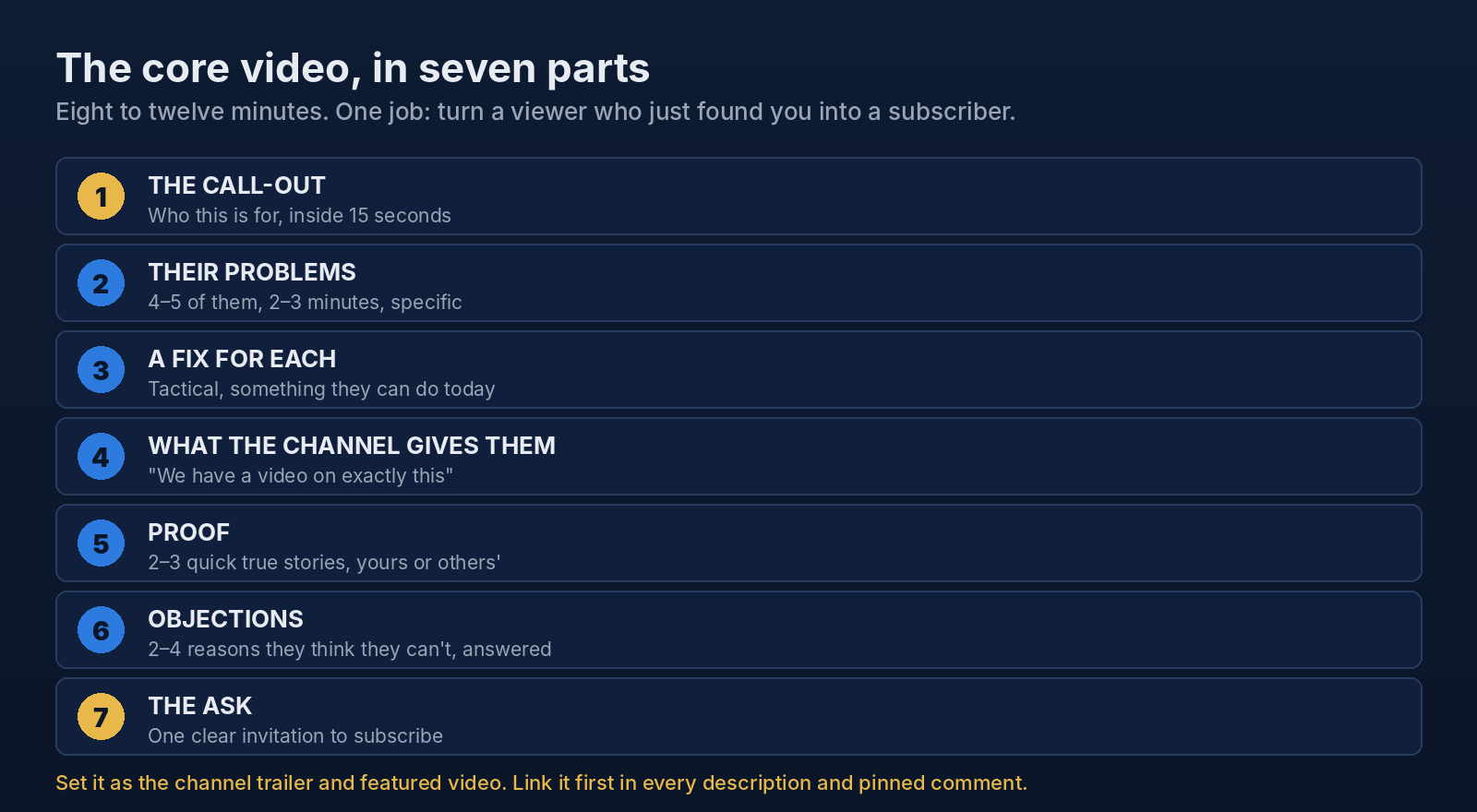
The call-out names exactly who the video is for in the first fifteen seconds. Their problems spends two or three minutes on the four or five things keeping them from the result they want, specific enough that they recognise themselves. Then a real fix for each one, not a tease, something they can go and do today. That is the value that justifies the video existing.
Then the turn. For each fix, tell them what the channel gives them on that subject: a full video on exactly this, a deeper one coming. Then proof, two or three quick true stories, yours or other people’s with their permission, or the evidence from your subject if the channel is brand new. Never invent one. Then two to four objections answered the way you would to a friend. Then one clear ask: if you want to be around people on the same path, subscribe, that is what this channel is for.
Write it as a script, out loud, before you record. Title and thumbnail it so a stranger would click it too. If your channel has no face, the me in the script becomes the channel’s promise: what we cover, how often, what you will be able to do. The structure does not change. Make it one of the first videos on the channel, and remake it every few months as the channel’s story gets better.
Where it lives
Set it as the channel trailer, which YouTube shows to visitors who have not subscribed. Pin it as the featured video at the top of the channel page. Put it in the first line of every video description. Pin a comment under every video that links to it. And then, most important of all, feed every video you ever make back to it.
The flywheel
When you publish a normal video, it gets its views, levels off, and is finished. On most channels that is the whole life of a video. Now put the core video at the end of it. Every video you publish from today carries an end screen that points at the core video, one card around the midpoint, the link in the first line of the description, the pinned comment, and a spoken line in the last thirty seconds: if you are trying to get your channel to 1,000, watch the video on screen now.
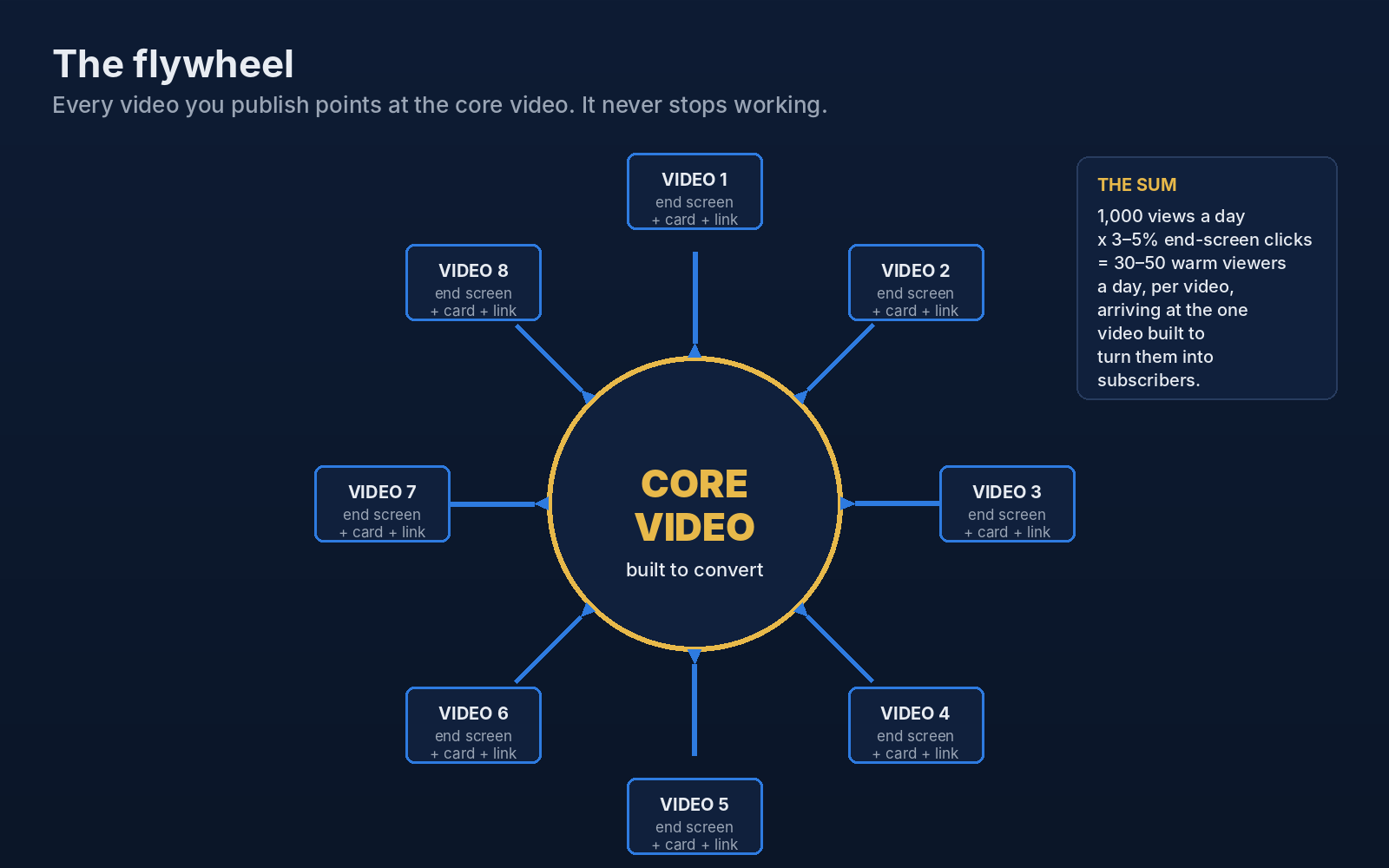
The arithmetic is honest rather than exciting. End-screen click rates are measured only against viewers still watching when the end screen appears, and they sit in the low single digits for most channels; the published guides put two to five per cent as typical and five to eight as good. At three per cent a video doing a thousand views a day sends thirty people a day to the core video. At five, fifty. That is per video, and it compounds: ten videos at that rate is three to five hundred warm viewers a day arriving at the one video on your channel built to turn them into subscribers.
The two levers are obvious once you see them. More videos feeding in, and better retention on each so more viewers reach the end screen. One element on the end screen plus the subscribe button, not four videos; a viewer offered six choices clicks none of them.
How to know it is working
Open the core video in Studio and look at subscribers gained against views, then compare it with your other videos. That number is the whole point. If it is not well above the channel’s normal rate after a few hundred views, rework the script, starting with the problems section and the ask. Check the end-screen click rate on each feeder video too; a low rate on a video with poor retention is a retention problem, not an end-screen problem.
Do this once and it runs for the life of the channel. It is the single most valuable setup job we know of, and it is strategy one of seven in the free report, with the other six, the twelve-week run sheet and the weekly scorecard. Get it at facelessconsole.com/1000subs. Monday’s post on what actually changed on 1 February has the two sums.